
Bombay Cat: Complete Breed Profile, Personality & Care Guide
Complete Bombay cat breed guide covering their panther-like appearance, affectionate personality, copper-eyed charm, health considerations, and the best products for this sleek Shorthair breed.
Bombay at a Glance
Good With
Temperament
Health Considerations
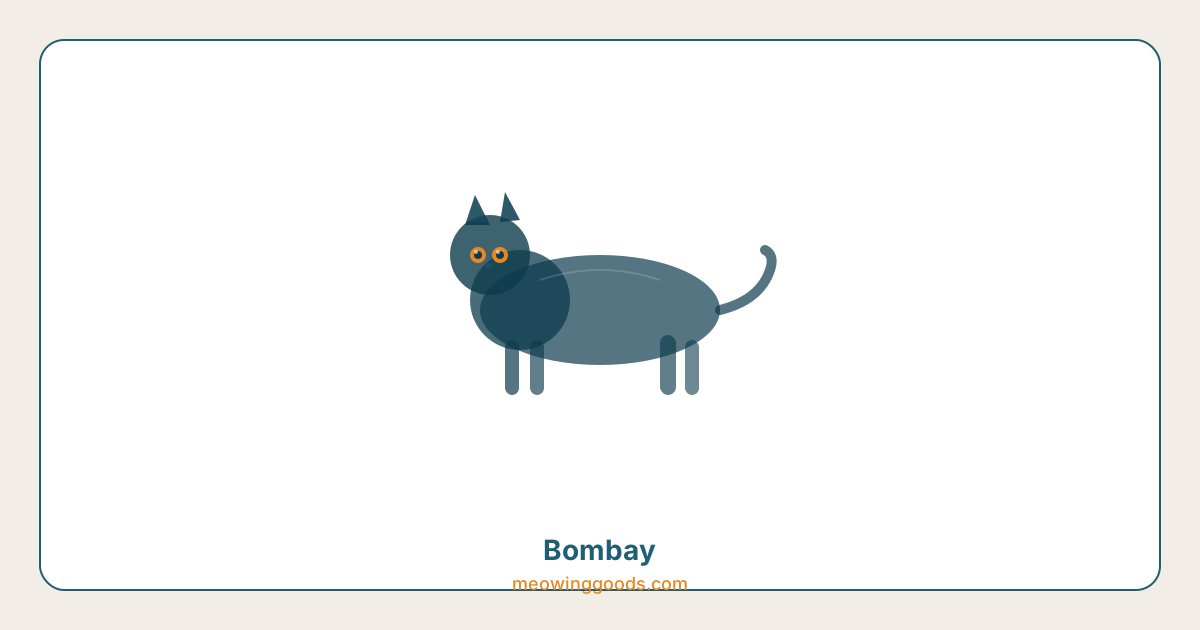
The Bombay cat is a miniature panther with the soul of a golden retriever — jet-black from nose to tail, with glowing copper eyes and a personality so affectionate and people-oriented that it redefines what most people expect from a cat. Created to resemble the sleek black leopards of India, the Bombay is all stunning surface beauty concealing the warmest, most sociable heart in the feline kingdom. If you want a cat who looks like a predator but lives for lap time, the Bombay is the breed that delivers both.
Meowing Goods is reader-supported. When you buy through links on our site, we may earn an affiliate commission at no extra cost to you. Learn more
Breed History and Origin
The Bombay cat is a uniquely American creation, developed by Nikki Horner of Louisville, Kentucky, beginning in 1958. Horner’s vision was specific and ambitious: she wanted to create a domestic cat that looked like a miniature Indian black leopard — a copper-eyed panther you could hold in your arms. The breed’s name reflects this inspiration, chosen for the Indian city of Bombay (now Mumbai) near where black leopards roamed.
To achieve her vision, Horner crossed sable Burmese cats with black American Shorthairs, selecting for the Burmese’s compact muscular build, rounded head, and intensely colored eyes, combined with the American Shorthair’s robust health and the deepest possible black coat. The breeding program required tremendous patience — early crosses did not immediately produce the look Horner envisioned. It took years of selective breeding to consistently produce kittens with the jet-black, patent-leather coat and vivid copper eye color that define the modern Bombay.
The Cat Fanciers’ Association (CFA) accepted the Bombay for championship competition in 1976, recognizing it as a distinct breed. The International Cat Association (TICA) also recognizes the Bombay, though TICA groups it with the Burmese in a combined breed group for judging purposes. It is worth noting that a separate breed also called the “British Bombay” exists in the United Kingdom, developed from British Shorthairs and Burmese — but it has a different standard and is not the same as the American Bombay described in this profile.
Despite being a planned breed with a clear development history, the Bombay has never achieved the widespread popularity of its parent breeds. This relative obscurity is somewhat puzzling, given the breed’s extraordinary combination of striking looks, easy-care coat, and warm personality. Those who discover the Bombay, however, tend to become lifelong devotees.
Physical Characteristics
Head and Face
The Bombay head is round with no sharp angles — a rounded skull, full face, broad muzzle, and a short, well-developed nose with a visible nose break (stop). The most arresting feature is the eyes: large, round, set wide apart, and ranging in color from deep gold to vivid copper. The ideal is a rich, glowing copper that contrasts dramatically with the jet-black coat. The ears are medium-sized, broad at the base, set well apart on the rounded skull, and have slightly rounded tips that tilt slightly forward, giving the face an alert, engaged expression.
Body
The Bombay body is medium-sized and surprisingly muscular for its compact appearance. The breed is described as heavier than it looks — pick up a Bombay, and you will be surprised by the solid weight of its well-muscled frame. Males typically weigh 9 to 11 pounds, while females range from 8 to 10 pounds. The chest is broad, the shoulders are strong, and the body is rounded without being cobby. The legs are proportional to the body, with round paws and medium-length tails that taper to a rounded tip. The Bombay has a distinctive walking gait — a slight sway that veteran breed enthusiasts describe as a “panther walk.”
Coat
The Bombay coat is the breed’s visual signature. It is short, close-lying, and so deeply black that it appears to absorb light. The texture is fine and satiny, producing a polished, patent-leather sheen that is unique among cat breeds. Each individual hair is jet black from root to tip — there is no lighter undercoat, no brown tones, and no gray hairs in a well-bred Bombay. This depth and uniformity of blackness, combined with the satin texture, creates a coat that genuinely gleams.
The only accepted coat color is black. Nose leather must be black, and paw pads must be black or very dark brown. This uniformity of coloring — black coat, black nose, black paws, copper eyes — is what gives the Bombay its unmistakable miniature panther appearance.
Personality and Temperament
The People Cat
The Bombay’s personality is its greatest asset. These are emphatically people-oriented cats who want to be near their humans at all times. They are not background cats who observe from a distance — they are participants who insert themselves into every activity you undertake. Working at your desk? The Bombay is on your keyboard. Watching television? The Bombay is on your lap. Sleeping? The Bombay is under your covers, pressed against your side. This level of people-orientation can be overwhelming for owners who want a more independent cat, but for those who crave a deeply bonded, physically affectionate companion, the Bombay is unparalleled.
Warm and Sociable
Bombays are genuinely friendly with almost everyone. Unlike breeds that bond exclusively to one person and are reserved with others, Bombays tend to extend their warmth to all family members and are usually welcoming to visitors. They are not shy — a Bombay will approach guests, investigate new people, and often charm strangers with their direct, engaging manner. This sociability makes them excellent family cats and good choices for households with frequent visitors.
Playful Without Being Destructive
The Bombay’s energy level is moderate — they enjoy daily play sessions and engage enthusiastically with interactive toys like the GoCat Da Bird, but they are not as relentlessly active as a Bengal or Abyssinian. After a good play session, a Bombay is perfectly content to settle into your lap for an extended cuddle. This balance of playfulness and calm makes them one of the most livable cat breeds for a wide range of households.
Heat-Seeking
Bombays are renowned warmth-seekers. They will find the warmest spot in the house — a sunbeam, a heating vent, a laptop, a human lap — and claim it. Their desire for warmth extends to sleeping habits: most Bombays prefer to sleep under the covers with their owners rather than on top of the bed. A Best Friends by Sheri Calming Bed with its raised rim and plush interior provides the warm, enclosed sleeping environment Bombays love when they are not burrowed into your blankets.
Vocal but Not Excessive
Bombays are moderately vocal — more talkative than a British Shorthair but far less than a Siamese. They have a distinctive, pleasant voice and will communicate their needs (food, attention, play) without the persistent yowling that characterizes some vocal breeds. Their vocalizations tend to be conversational rather than demanding.
Health and Lifespan
Bombays are generally healthy cats with a lifespan of 12 to 16 years. Their dual-breed heritage (Burmese and American Shorthair) provides a reasonably broad genetic base, but several health conditions warrant attention.
Hypertrophic Cardiomyopathy (HCM)
HCM, the most common heart disease in cats, affects Bombays at a moderate rate. According to the Cornell Feline Health Center, HCM causes thickening of the heart muscle walls that can lead to heart failure, blood clots, or sudden death. Annual cardiac screening via echocardiography is recommended, especially for breeding cats.
Craniofacial Defect (Burmese Head Defect)
Inherited from the Burmese side of their lineage, this severe congenital defect affects skull and facial development, causing incompletely formed skulls in affected kittens. This is a lethal defect — affected kittens cannot survive. The condition is inherited as an autosomal recessive trait, meaning both parents must carry the gene for affected kittens to be born. Responsible breeders screen for this condition and do not breed carriers together. This is primarily a breeder concern, but it underscores the importance of purchasing from breeders who understand Burmese genetics.
Excessive Tearing
Some Bombays experience mild to moderate excessive tearing, similar to but less severe than what is seen in flat-faced breeds like the Persian. The slight nose break in the Bombay can contribute to tear duct drainage issues. Regular face cleaning with a damp cloth keeps tear staining (which is very visible against the black coat area) under control.
Obesity
The Bombay’s love of food, combined with their moderate (not high) activity level, makes them prone to weight gain. This is one of the breed’s most common health issues and is entirely preventable with proper diet management. Use measured portions, avoid free-feeding, and maintain a consistent exercise routine through daily interactive play.
Grooming and Care
The Bombay is one of the easiest breeds to groom. Their short, close-lying, single-layer coat practically takes care of itself.
Weekly Maintenance
A weekly brushing with a soft bristle brush, rubber grooming mitt, or chamois cloth is all the Bombay coat needs. This removes loose hair, distributes natural skin oils, and enhances the coat’s signature lacquered sheen. Some Bombay owners use a chamois or silk cloth after brushing to bring out an extra level of polish — the coat’s natural texture responds beautifully to this finishing touch.
Face Cleaning
For Bombays who experience excessive tearing, wipe around the eyes with a damp cloth or pet-safe eye wipes two to three times per week. While the black coat hides tear staining better than a light-colored breed, dried tears can form crusty deposits that irritate the skin if not cleaned.
Standard Care
Complete the grooming routine with nail trimming every two to three weeks, regular ear checks, and dental care. The Bombay’s round, wide-set eyes should be monitored for any unusual discharge or redness.
Diet and Nutrition
Bombays love food — perhaps more than any aspect of their daily life. This enthusiasm for eating, combined with their moderate activity level, makes nutritional management particularly important.
Key Nutrition Priorities
- Calorie control — This is the single most important nutritional priority for Bombays. Feed measured portions at set mealtimes and resist the Bombay’s considerable food-begging charm. Free-feeding is strongly discouraged.
- High-quality protein — Support the Bombay’s muscular build with foods where a named animal protein is the first ingredient. Blue Buffalo Tastefuls Indoor provides quality protein with moderate calories.
- Wet food inclusion — Incorporate wet food for hydration and satiety. Wet food’s higher water content and lower calorie density help Bombays feel full without overeating.
- Interactive feeding — Use puzzle feeders and slow-feeding bowls to extend mealtimes and provide mental stimulation. This prevents the rapid gulping that Bombays are prone to.
- AAFCO certification — Only feed food certified as “complete and balanced” by AAFCO for your cat’s life stage.
Living Environment
Bombays are adaptable cats who thrive in a variety of living situations, from studio apartments to large family homes. Their ideal environment includes:
- Warm spots — Heated cat beds, sunny windowsills, and proximity to heat sources. Bombays are warmth-seekers who will appreciate strategically placed cozy resting areas.
- Lap access — If you are home, the Bombay wants to be on your lap. Arrange your furniture and living space to accommodate this.
- Interactive toys — Wand toys, feather teasers, and prey-simulation toys like GoCat Da Bird for daily play sessions.
- Companionship — Bombays do not tolerate extended periods alone. If you work full-time, a second cat provides essential social contact during your absence.
- Indoor living — Bombays should be kept strictly indoors. Their friendly, trusting temperament makes them vulnerable outdoors, and their jet-black coat makes them difficult to see near roads at night.
Is This Breed Right for You?
A Bombay May Be a Great Fit If You:
- Want a strikingly beautiful cat who looks like a miniature panther
- Crave a deeply affectionate, physically demonstrative companion who loves to be held
- Are home frequently or can provide a feline companion for company
- Have children, dogs, or other pets — the Bombay is adaptable and social
- Want a low-maintenance grooming routine with a self-maintaining coat
- Live in an apartment — the Bombay’s moderate energy and quiet voice are apartment-friendly
- Are a first-time cat owner looking for an easy, rewarding breed
A Bombay May NOT Be Ideal If You:
- Want an independent cat who is content to be left alone for long hours
- Prefer a cat who is reserved and does not demand constant physical contact
- Are looking for a high-energy breed for vigorous play and athletic activities (consider a Bengal)
- Want a variety of color options — the Bombay comes only in black
- Tend to free-feed and are not disciplined about portion control (the Bombay’s weight will suffer)
- Want a cat who sleeps in their own bed, not yours
If you love the Bombay’s affectionate personality but want a wider range of coat colors, the Burmese — one of the Bombay’s parent breeds — offers the same warm, people-oriented temperament in sable, champagne, blue, and platinum. If you want the black coat with a more independent personality, the American Shorthair in solid black offers beauty with more self-sufficiency.
Recommended Products for Bombays
Based on the Bombay’s specific needs — moderate playfulness, strong food drive, heat-seeking behavior, and desire for physical closeness — here are the products we recommend:
-
GoCat Da Bird — Triggers the Bombay’s prey drive for engaging interactive play sessions that provide exercise and mental stimulation. Essential for preventing the weight gain this breed is prone to.
-
Blue Buffalo Tastefuls Indoor — Moderate-calorie, high-protein nutrition designed for the indoor cats that Bombays exclusively are. Supports weight management for a breed that loves to eat.
-
Best Friends by Sheri Calming Bed — The raised rim and plush interior create the warm, enclosed sleeping experience that heat-seeking Bombays love when they are not burrowed into your blankets.
Frequently Asked Questions
Are Bombay cats rare?
Bombay cats are not as common as breeds like the Persian, Siamese, or Maine Coon, but they are not considered truly rare either. They occupy a middle ground in terms of availability. The breed has a dedicated but relatively small community of breeders, and you may need to research specifically for Bombay breeders rather than finding them at a general cattery. In the United States, Bombay breeders are present in most regions but not abundantly so. Waiting lists of two to four months are common. The breed’s relatively low profile is partly because Bombays are sometimes mistaken for ordinary black domestic shorthair cats by people unfamiliar with the breed, which undersells their distinctive qualities — the jet-black patent leather coat, copper eyes, and sway-backed panther walk that set them apart from any random black cat.
Why are Bombay cats called “parlor panthers”?
Bombay cats earned the nickname “parlor panther” because their appearance deliberately mimics the look of a miniature black panther. Breed creator Nikki Horner specifically aimed to develop a cat that resembled a small Indian black leopard, and the result is strikingly convincing. The Bombay’s jet-black coat has a lacquered, patent-leather sheen that no other breed matches. Combined with their copper-gold eyes (which glow like pennies against the dark fur), muscular yet sleek body, and characteristic swaying gait, the Bombay genuinely resembles a panther scaled down to housecat size. The “parlor” part of the nickname reflects their distinctly domestic temperament — while they look wild, Bombays are among the most affectionate, people-oriented, and home-loving cat breeds. They are the panther who would rather curl up on your lap than prowl the savanna.
Do Bombay cats like to be held?
Yes, most Bombay cats actively enjoy being held, carried, and cuddled — they are one of the most physically affectionate cat breeds. Unlike breeds that tolerate handling but do not seek it, Bombays often initiate physical contact. They will climb into your lap uninvited, drape themselves across your shoulders, burrow under blankets to be close to you, and vocalize their displeasure if put down before they are ready. This desire for physical closeness extends to sleeping arrangements — most Bombays sleep on or next to their owners, often burrowed under the covers. If you want a cat who actively wants to be in your arms, the Bombay is hard to beat. However, always respect individual personality differences — while the breed tendency is toward extreme affection, some individuals may prefer to sit beside you rather than on you.
Are Bombay cats good for first-time cat owners?
Bombay cats are an excellent choice for first-time cat owners. Their moderate energy level means they are playful and entertaining without being overwhelming or destructive. Their low grooming needs eliminate the daily coat-care commitment that high-maintenance breeds require. Their social, adaptable temperament means they adjust well to new environments and are forgiving of the learning curve that comes with first-time pet ownership. They are good with children, get along with dogs, and thrive in apartments — all practical advantages for new cat owners. The only caveat is that Bombays are strongly people-oriented and do not tolerate long periods alone well. If you work long hours, consider getting two cats (a second Bombay or another sociable breed) so they have companionship during the day.
Do Bombay cats get along with other cats?
Bombays generally get along well with other cats, but with an important caveat: they tend to want to be the dominant cat in the household. Bombays are confident and social, and they usually establish themselves at the top of the feline hierarchy relatively quickly and without aggression. They are rarely the instigator of cat conflicts, but they do prefer to be the one who gets first access to the food bowl, the best sleeping spot, and the most lap time. They coexist best with cats who have a more easy-going temperament and are willing to share the social spotlight. Pairing a Bombay with another equally dominant breed like a Siamese or Bengal may create tension. The best companion matches for a Bombay are laid-back breeds like the Ragdoll, British Shorthair, or another Bombay.
Sources
Recommended Products for Bombay Cats
GoCat Da Bird
Bombay cats have a strong prey drive and love interactive play sessions that mimic hunting. The Da Bird's realistic feather action triggers their pounce-and-chase instincts for engaging daily play.
Blue Buffalo Tastefuls Indoor
Bombays love food and are prone to weight gain. This moderate-calorie, high-protein formula helps maintain their sleek, muscular physique without contributing to the obesity this breed is susceptible to.
Best Friends by Sheri Calming Bed
Bombays are warmth-seeking, cuddly cats who love to burrow into soft surfaces. The Sheri calming bed's raised rim and plush interior create the warm, enclosed sleeping experience Bombays adore.
Frequently Asked Questions

Senior Cat Product Reviewer & Feline Nutrition Specialist
Sarah has spent over 12 years testing and reviewing cat products — from premium kibble to the latest interactive toys. She holds a certification in feline nutrition and is an associate member of the International Association of Animal Behavior Consultants (IAABC). Sarah lives in Austin, Texas, with her three cats: Biscuit (a tabby with opinions about everything), Mochi (a Siamese who demands only the best), and Clementine (a rescue who taught her the meaning of patience). When she isn't unboxing the latest cat gadget, you'll find her writing about evidence-based nutrition, helping cat parents decode ingredient labels, and campaigning for better transparency in the pet food industry.