
Savannah Cat: Complete Breed Profile, Personality & Care Guide
Complete Savannah cat breed guide covering their African Serval heritage, extraordinary size, intense activity needs, legal considerations, health profile, and the best products for this striking Hybrid breed.
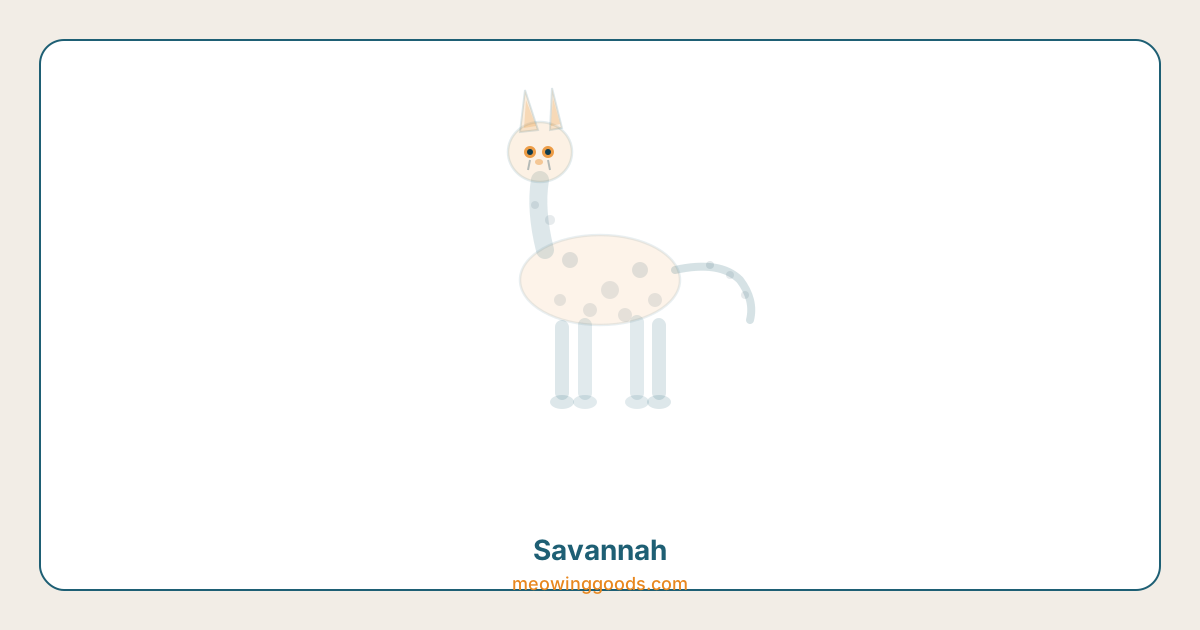
Savannah at a Glance
Good With
Temperament
Health Considerations
The Savannah cat is not a pet for the casual cat owner — it is a lifestyle commitment, an adventure, and an experience unlike any other in the domestic cat world. Bred from the African Serval, the Savannah is the tallest, most exotic-looking, and most intensely active of all domestic cat breeds. With their spotted coats, enormous ears, impossibly long legs, and a personality that combines feline grace with canine loyalty, Savannahs blur the line between wild and domestic in the most spectacular way possible. If you are an experienced cat owner looking for a cat who will challenge everything you think you know about felines, the Savannah is waiting.
Meowing Goods is reader-supported. When you buy through links on our site, we may earn an affiliate commission at no extra cost to you. Learn more
Breed History and Origin
The Savannah cat’s story begins on April 7, 1986, when a domestic cat owned by Judee Frank was crossed with a male African Serval (Leptailurus serval) — a tall, long-legged wild cat native to the African savanna. The resulting kitten, named “Savannah,” was the first documented Serval-domestic hybrid. She displayed a remarkable combination of her Serval father’s wild appearance and her domestic mother’s manageable temperament, inspiring the development of an entirely new breed.
Patrick Kelley, an early enthusiast, and Joyce Sroufe, a breeder who produced the first Serval-to-domestic backcross litters, are credited with transforming the Savannah from a novelty into a recognized breed. The breeding process is extraordinarily challenging. African Servals weigh 26 to 40 pounds, while domestic cats weigh 7 to 11 pounds — the size difference makes natural mating difficult and sometimes dangerous. Gestation periods also differ: Servals carry for approximately 74 days compared to 65 days for domestic cats, which can cause complications in hybrid pregnancies.
Early-generation hybrid males (F1 through F4) are typically sterile due to chromosomal incompatibility between the two species, meaning that only female hybrids can be used for breeding until later generations. This biological limitation makes Savannah breeding a slow, expensive, multi-generational process.
The International Cat Association (TICA) accepted the Savannah for registration in 2001 and granted championship status in 2012. The Cat Fanciers’ Association (CFA) does not currently recognize the Savannah, as CFA’s policy excludes wild cat hybrids from its registry. This TICA-only recognition means the Savannah is shown and evaluated exclusively under TICA standards.
Savannahs are classified by filial generation, which indicates the number of generations removed from the original Serval ancestor:
- F1 — One Serval parent (approximately 50% Serval). The largest, most wild-appearing, and most expensive generation.
- F2 — One Serval grandparent (approximately 25% Serval).
- F3 — One Serval great-grandparent (approximately 12.5% Serval).
- F4 — Approximately 6% Serval.
- F5 (SBT) — At least four generations from the Serval. Classified as Stud Book Tradition and eligible for championship competition.
Each successive generation typically produces cats that are smaller, less wild in appearance, and more predictably domestic in temperament — though even F5 Savannahs retain significantly more energy and intensity than most domestic breeds.
Physical Characteristics
Head and Face
The Savannah head is a modified wedge shape — longer than it is wide, with a long, elegant neck that contributes to the breed’s tall, leggy silhouette. The eyes are medium-sized, set beneath a slightly hooded brow, and come in all colors (gold, green, brown, and hazel are most common). The most striking facial feature is the ears — large, tall, wide at the base, and set high on the head, sometimes with ocelli (the light-colored markings on the back of the ears that mimic false eyes, inherited from the Serval). Dark “tear marks” run from the inner corners of the eyes down alongside the nose, another Serval-inherited trait that adds to the wild appearance.
Body
The Savannah body is built for speed and agility. These are long, lean, tall cats with a leggy build that sets them apart from every other domestic breed. The torso is long with a deep rib cage, and the hind legs are slightly longer than the front legs, creating a rising profile from shoulder to hip. The paws are large and elongated — almost hand-like in their dexterity. The tail is medium-length, thick, and carried low.
F1 males can reach 20 to 25 pounds and stand 16 to 18 inches at the shoulder. Even later-generation Savannahs (F4-F5) are noticeably taller and more athletic than standard domestic cats, with males weighing 12 to 18 pounds and a leggy, graceful build that commands attention.
Coat
The Savannah coat is short to medium in length, slightly coarse in texture, and lies close to the body. The most prized and recognized pattern is bold, dark spotted tabby on a warm golden, tawny, or cool silver background — closely mimicking the African Serval’s wild coat. Spots should be solid, dark, and randomly distributed. Marble patterns, though they occur, are not accepted for championship competition.
Accepted coat colors include brown spotted tabby, silver spotted tabby, black (melanistic), and black smoke. The contrast between the spots and the background color should be vivid and dramatic. Many Savannahs also display the Serval’s characteristic bars on the backs of the ears and the dark tear-streak facial markings.
Personality and Temperament
Wild Energy, Domestic Heart
The Savannah’s temperament is unlike any other domestic cat. These are not cats who sleep 16 hours a day and occasionally bat at a feather toy. Savannahs are relentlessly active, intensely curious, and constantly seeking stimulation. They jump to the tops of doors, open cabinets, investigate every sound, and engage with their environment with an intensity that astonishes first-time owners. An unstimulated Savannah is a destructive Savannah — they will find their own entertainment if you do not provide it.
Loyalty Beyond Feline Norms
Savannahs bond with their owners with a depth and loyalty that is more reminiscent of dogs than cats. They follow their people from room to room, greet them at the door, and often select one person as their primary companion. Many Savannahs display protective behavior — positioning themselves between their owner and strangers, investigating unusual sounds, and showing visible alertness when unfamiliar people enter the home.
Intelligence That Demands Respect
The Savannah is one of the most intelligent domestic cat breeds. They learn at a pace that challenges even experienced cat owners — figuring out door handles, faucets, cabinet latches, and light switches. They can be taught complex tricks, will walk on a leash, play fetch, and respond to verbal commands. This intelligence is a double-edged sword: a bored Savannah will apply their problem-solving abilities to finding new ways to create chaos.
Water Fascination
Like their Bengal relatives, many Savannahs are fascinated by water. They will play in water bowls, investigate running faucets, splash in sinks and bathtubs, and some will swim. This trait comes directly from the African Serval, which is an accomplished hunter of fish and waterfowl.
Social but Selective
Savannahs are social with their families but can be reserved or cautious with strangers. They are not typically aggressive toward unfamiliar people, but they may observe from a distance rather than rushing to greet visitors. With other pets, Savannahs generally do well — particularly with dogs, whose energy level and play style often match the Savannah’s better than other cat breeds’ do.
Health and Lifespan
Savannahs are generally healthy cats with an impressive lifespan of 12 to 20 years — one of the longest among domestic breeds, likely inherited from the Serval’s robust wild genetics. However, several health considerations are important.
Hypertrophic Cardiomyopathy (HCM)
HCM affects Savannahs at a rate comparable to other domestic breeds. Annual cardiac screening via echocardiography is recommended, especially for breeding cats. The Cornell Feline Health Center recommends echocardiographic screening as the gold standard for HCM detection.
Anesthetic Sensitivity
Savannahs, particularly early generations, may show increased sensitivity to certain anesthetics, specifically ketamine. Always inform your veterinarian that your cat is a Savannah/Serval hybrid before any procedure requiring sedation. Many Savannah-experienced veterinarians use isoflurane or sevoflurane instead of ketamine combinations. This is not merely a preference — it can be a life-or-death distinction.
Male Infertility
Male Savannahs from F1 through F4 generations are typically sterile due to chromosomal incompatibility between the Serval and domestic cat genomes. This is a breeding consideration rather than a pet-owner health concern, but it explains why only female hybrids from early generations can be used in breeding programs and why Savannah breeding is so complex and expensive.
Pyruvate Kinase Deficiency (PK Deficiency)
Some Savannah lines may carry PK deficiency, an inherited enzyme deficiency that can cause hemolytic anemia. A DNA test is available, and responsible breeders screen for this condition.
Grooming and Care
The Savannah’s short coat is one of the breed’s easiest features to manage. Grooming needs are minimal — the coat is self-maintaining, sheds lightly, and rarely mats.
Weekly Maintenance
A weekly brushing with a FURminator deshedding tool or rubber grooming mitt is sufficient to remove loose fur and keep the coat’s bold spotted pattern looking sharp. Savannahs typically enjoy being brushed, particularly if you start the habit as kittens.
Nail, Ear, and Dental Care
Trim nails every two to three weeks. Check ears weekly — the large, open ear structure can accumulate debris. Maintain dental health with regular brushing or enzymatic dental treats. Start all grooming routines early, as Savannahs’ intelligence means they form habits (both good and bad) quickly.
Diet and Nutrition
Savannahs are large, muscular, high-energy cats with metabolic needs that differ significantly from sedentary breeds.
Key Nutrition Priorities
- High protein, moderate to high fat — Savannahs’ athletic build and relentless activity level demand a protein-rich diet. Choose foods where a named animal protein is the first ingredient. Many Savannah owners feed a combination of premium wet food and high-quality dry food.
- Calorie-appropriate feeding — Active Savannahs, especially early generations, may need 25 to 40 percent more calories than a typical domestic cat. Monitor body condition and adjust portions accordingly — a healthy Savannah should be lean, long, and muscular, never round or paunchy.
- Raw or minimally processed options — Some Savannah owners and breeders advocate for raw or lightly cooked diets that more closely mimic the Serval’s natural diet. If pursuing raw feeding, work with a veterinary nutritionist to ensure nutritional completeness. Never feed raw without professional guidance.
- Hydration — Provide multiple water sources, including a cat water fountain. Savannahs who play in water will drink more from flowing water sources.
- AAFCO certification — For commercial foods, only feed food certified as “complete and balanced” by AAFCO for your cat’s life stage.
Living Environment
Savannahs need space, stimulation, and security. Their living environment should be designed to accommodate a large, athletic, intelligent cat who will test every boundary.
Environmental Essentials
- Vertical space — Tall cat trees (floor to ceiling), wall-mounted shelves, catwalks, and climbing structures are essential. Savannahs can jump 8 feet or higher and need vertical outlets for their energy.
- Secure windows and doors — Savannahs are escape artists. Ensure all windows have sturdy screens, and consider childproofing door handles, as Savannahs can learn to open lever-style handles.
- Catio or enclosed outdoor space — If possible, a screened outdoor enclosure (catio) provides the environmental stimulation Savannahs crave in a safe setting.
- Interactive enrichment — Rotate puzzle toys frequently (a Catit Senses 2.0 Digger is a starting point, not an endpoint), provide wand toys, offer fetch opportunities, and consider clicker training.
- Leash walking — Daily leash walks are strongly recommended. Savannahs take to harness training better than almost any breed and benefit enormously from outdoor enrichment.
- Companionship — Savannahs should not be left alone for long periods. A second cat (another high-energy breed like a Bengal or Abyssinian) or a compatible dog provides social stimulation.
Is This Breed Right for You?
A Savannah May Be a Great Fit If You:
- Are an experienced cat owner ready for the most challenging and rewarding breed in the world
- Have significant daily time for interactive play, enrichment, and companionship
- Live in a spacious home with room for tall climbing structures and a catio
- Want a cat who walks on a leash, plays fetch, and bonds like a dog
- Can afford the high purchase price and the enrichment investment this breed demands
- Have verified that Savannah cats are legal in your state, county, and city
- Have a Savannah-experienced veterinarian who understands hybrid cat anesthesia protocols
A Savannah May NOT Be Ideal If You:
- Want a calm, quiet, low-energy companion (consider a Persian or Ragdoll)
- Are away from home for 8+ hours daily without a companion animal for the Savannah
- Live in a small apartment with no outdoor access or catio
- Are a first-time cat owner — the Savannah is not a beginner breed
- Live in a jurisdiction where Savannah ownership is restricted or banned
- Have very young children (Savannahs’ size and energy can overwhelm small children)
- Are not prepared for a cat who will open your cabinets, jump on your counters, and test every barrier in your home
If you love the Savannah’s wild looks and high energy but want a slightly more manageable temperament, the Bengal offers a similar exotic appearance with marginally lower intensity. For the wild look with moderate energy, consider the Abyssinian.
Recommended Products for Savannahs
Based on the Savannah’s specific needs — extreme activity, exceptional intelligence, large powerful build, and minimal grooming — here are the products we recommend:
-
Catit Senses 2.0 Digger — A starting-point puzzle feeder for mental stimulation. Savannahs will master it quickly, so use it as part of a rotation of enrichment toys rather than a standalone solution.
-
SmartCat Ultimate Scratching Post — A tall, heavy scratching post that handles the Savannah’s powerful scratching, jumping, and full-body stretches without tipping.
-
FURminator Cat Deshedding Tool — Weekly coat maintenance that keeps the spotted coat gleaming and doubles as a bonding session with this highly social breed.
Frequently Asked Questions
Are Savannah cats legal to own?
Savannah cat legality varies significantly by location and generation. In the United States, some states (including New York, Hawaii, Georgia, and Massachusetts) ban Savannah cats entirely or restrict ownership of early generations (F1-F3). Many states allow F4 and later generations with no restrictions, while others require exotic animal permits. City and county regulations may impose additional restrictions beyond state law. Internationally, regulations vary even more widely — Australia bans Savannahs entirely, the UK requires a Dangerous Wild Animals licence for early generations, and many European countries have specific hybrid cat regulations. Before purchasing a Savannah, research your local, county, and state laws thoroughly. The generation classification matters legally: F1 (50% Serval) through F3 face the most restrictions, while F5 and later generations (called SBT — Stud Book Tradition) are typically treated as domestic cats.
How big do Savannah cats get?
Savannah cat size varies dramatically based on generation. F1 Savannahs (first generation, 50% Serval) are the largest, with males reaching 20 to 25 pounds and standing 16 to 18 inches at the shoulder — roughly the size of a medium dog. F2 Savannahs are slightly smaller, typically 15 to 20 pounds. By the F3 to F5 generations, Savannahs are closer to a large domestic cat, with males weighing 12 to 18 pounds and females 10 to 13 pounds. Height is often more impressive than weight — even later-generation Savannahs are notably tall and leggy compared to typical domestic breeds, with long necks and large upright ears that add to their imposing presence. An F5 Savannah standing next to a standard domestic cat looks strikingly different, even though their weights may be comparable.
Do Savannah cats get along with dogs?
Savannahs are often described as the most dog-compatible cat breed in existence. Their bold, confident temperament means they are rarely intimidated by dogs, and their high energy level makes them enthusiastic playmates for active canine companions. Many Savannahs actively seek out dogs as play partners, engaging in wrestling, chase games, and tug-of-war. Their size — particularly early-generation Savannahs — also means they can physically hold their own with medium-sized dogs. However, introductions should still be gradual and supervised, and the dog’s prey drive must be considered. A calm, playful dog is the ideal match. Dogs with strong predatory instincts toward small, fast-moving animals may not be suitable companions, particularly for smaller later-generation Savannahs.
Can Savannah cats be walked on a leash?
Yes, leash walking is one of the most recommended activities for Savannah cats, and the breed takes to it more readily than almost any other cat breed. Savannahs’ high intelligence, bold temperament, and craving for environmental stimulation make leash walks a natural fit. Most Savannahs can be harness-trained beginning as kittens using a well-fitted escape-proof harness (not a collar, which they can slip). Start indoors, progress to quiet outdoor areas, and gradually increase the complexity of the walking environment. Many experienced Savannah owners walk their cats daily, and some even take them hiking on trails. Leash walking provides the physical exercise, mental stimulation, and sensory enrichment that Savannahs desperately need and cannot fully obtain from indoor living alone.
How much does a Savannah cat cost?
Savannahs are among the most expensive cat breeds in the world. F1 Savannahs (50% Serval) typically cost $12,000 to $20,000, with exceptional individuals from top breeders reaching $25,000 or more. F2 Savannahs range from $6,000 to $10,000, F3 from $3,000 to $6,000, and F4 to F5 (SBT) from $1,500 to $4,000. These prices reflect the extraordinary difficulty of Savannah breeding — the size difference between a Serval and a domestic cat makes natural mating dangerous and often unsuccessful, gestation periods differ between the species, and early-generation males are sterile until F5 or later. The limited supply and high demand also contribute to pricing. Always choose a TICA-registered breeder who provides health screening documentation, particularly for HCM, and verify the generation and registration paperwork.
Sources
Recommended Products for Savannah Cats
Catit Senses 2.0 Digger
Savannahs are exceptionally intelligent and need constant mental challenge. The Digger provides puzzle-feeding enrichment, but expect a Savannah to master it quickly — rotate puzzle toys frequently to prevent boredom.
SmartCat Ultimate Scratching Post
Savannahs are tall, powerful cats who need an equally tall and sturdy scratching post. The SmartCat's 32-inch height and heavy base handle the vigorous scratching and full-body stretches of this large, athletic breed.
FURminator Cat Deshedding Tool
Despite their low grooming needs, a weekly deshedding session keeps the Savannah's short, dense coat in peak condition and provides a bonding opportunity with this highly social breed.
Frequently Asked Questions
Senior Cat Product Reviewer & Feline Nutrition Specialist
Sarah has spent over 12 years testing and reviewing cat products — from premium kibble to the latest interactive toys. She holds a certification in feline nutrition and is an associate member of the International Association of Animal Behavior Consultants (IAABC). Sarah lives in Austin, Texas, with her three cats: Biscuit (a tabby with opinions about everything), Mochi (a Siamese who demands only the best), and Clementine (a rescue who taught her the meaning of patience). When she isn't unboxing the latest cat gadget, you'll find her writing about evidence-based nutrition, helping cat parents decode ingredient labels, and campaigning for better transparency in the pet food industry.