
Cat Allergies Guide: Symptoms, Causes, and Treatment for Feline Allergies
Complete guide to cat allergies — food allergies, environmental allergies, and flea allergy dermatitis. Learn how to identify symptoms, work with your vet, and manage allergic cats.

Senior Cat Product Reviewer & Feline Nutrition Specialist
Affiliate Disclosure: Meowing Goods is reader-supported. When you buy through links on our site, we may earn an affiliate commission at no additional cost to you. This helps us continue to provide free, expert-backed content. As an Amazon Associate we earn from qualifying purchases. Full disclosure.
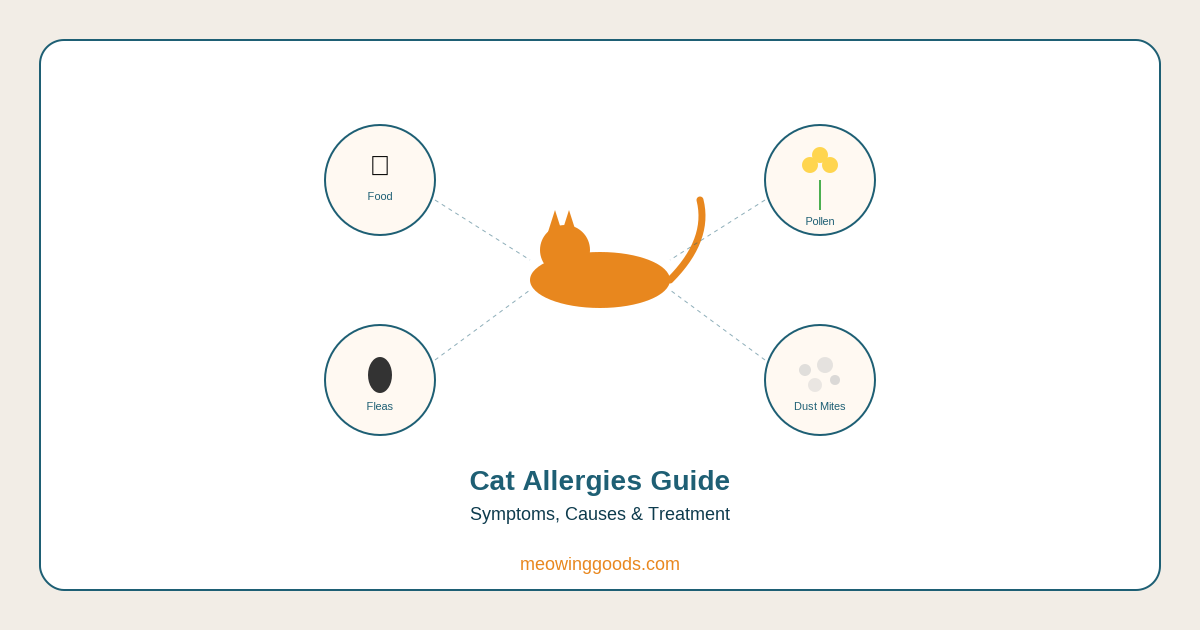
Quick answer: Cats develop three main types of allergies: food allergies (most commonly to beef, fish, chicken, or dairy — not grains), environmental allergies (dust mites, pollen, mold, cleaning products), and flea allergy dermatitis (allergic reaction to flea saliva). Symptoms typically appear as skin problems — excessive scratching, hair loss, ear infections, and miliary dermatitis — rather than sneezing. Diagnosis requires veterinary evaluation and, for food allergies, an 8-12 week elimination diet trial.
Meowing Goods is reader-supported. When you buy through links on our site, we may earn an affiliate commission at no extra cost to you. Learn more
Allergies are among the most common chronic conditions in domestic cats, yet they are also among the most frequently misdiagnosed and mistreated. Part of the problem is that cat allergies present differently than human allergies — instead of sneezing and watery eyes, allergic cats typically develop skin and coat problems that can mimic a dozen other conditions.
Understanding the three categories of feline allergies, recognizing the symptoms, and working with your veterinarian for proper diagnosis is essential for effective management.
The Three Categories of Feline Allergies
1. Flea Allergy Dermatitis (FAD)
Flea allergy dermatitis is the most common allergy in cats globally. Despite its prevalence, it is also the most commonly overlooked because owners of indoor cats often dismiss fleas as impossible, and because allergic cats groom so aggressively that they remove the evidence (fleas and flea dirt) before the owner ever sees them.
How It Works
FAD is not a reaction to the flea bite itself but to specific proteins in flea saliva. In a non-allergic cat, a flea bite causes temporary local irritation. In an allergic cat, a single flea bite triggers a systemic immune response — the body releases histamines and other inflammatory mediators that cause widespread itching, inflammation, and skin damage far beyond the bite site.
Symptoms
- Intense scratching and biting, concentrated on the lower back, base of the tail, and inner thighs
- Miliary dermatitis — small, crusty papules felt by running your hand along the back and neck
- Hair loss (alopecia) on the belly, inner thighs, and lower back from excessive grooming
- Excoriated (scratched raw) skin with secondary bacterial infections
- Restlessness and irritability
Treatment
Year-round flea prevention is the only effective management strategy. Products like Seresto flea collars or topical preventatives must be applied consistently to every animal in the household — not just the allergic cat. If one pet carries fleas, the allergic cat will be exposed. Environmental treatment (vacuuming, washing bedding, and in severe cases, professional home treatment) may be necessary to eliminate flea eggs and larvae in the environment.
2. Environmental Allergies (Atopic Dermatitis)
Environmental allergies — also called atopy or atopic dermatitis — are reactions to inhaled or contact allergens in the cat’s environment. Unlike food allergies, environmental allergies often have a seasonal component, though indoor allergens can cause year-round symptoms.
Common Environmental Allergens
- Dust mites — the most common indoor allergen
- Pollen (grass, tree, weed) — seasonal
- Mold spores — seasonal or year-round depending on location
- Cleaning products — chemical residues on surfaces cats walk on and then groom from their paws
- Cat litter — particularly scented varieties with chemical fragrances
- Cigarette smoke
- Perfumes, air fresheners, and scented candles
- Laundry detergent — residue on bedding and clothing the cat contacts
Symptoms
- Head and neck scratching (a hallmark of feline atopy)
- Ear inflammation and recurrent ear infections
- Symmetrical hair loss
- Eosinophilic granuloma complex — raised, ulcerated lesions on the lips, palate, or skin
- Watery eyes (less common in cats than humans but does occur)
- Respiratory signs — coughing, wheezing (feline asthma is sometimes allergy-related)
Diagnosis and Treatment
Intradermal skin testing or serum allergy testing can identify specific environmental triggers. Treatment options include:
- Allergen avoidance — removing or reducing exposure to identified triggers
- Antihistamines — variable effectiveness in cats (cetirizine and chlorpheniramine are most commonly used)
- Corticosteroids — effective but with long-term side effects; used for short-term flare management
- Cyclosporine (Atopica) — immunosuppressive medication for long-term management
- Allergen-specific immunotherapy (allergy shots) — the only treatment that addresses the underlying immune response rather than just symptoms. Effective in 60-70% of cats.
- Feliway diffusers — while not treating the allergy itself, reducing stress can minimize stress-related flare-ups
3. Food Allergies
Food allergies develop when the immune system misidentifies a dietary protein as a threat and mounts an inflammatory response. This is fundamentally different from food intolerance (which is a digestive issue, not an immune response) and from food sensitivity (a less specific term).
The Real Culprits
Contrary to popular marketing that emphasizes grain-free diets, the overwhelming evidence from veterinary dermatology identifies proteins — not grains — as the primary food allergens in cats:
- Beef — the most common food allergen in cats
- Fish — particularly common in cats fed fish-based diets long-term
- Chicken — increasingly common as chicken-based foods dominate the market
- Dairy — many cats are lactose intolerant, but true dairy allergy is immune-mediated
- Eggs — less common but documented
Grain allergies in cats are extraordinarily rare. The grain-free marketing trend was driven by consumer perception, not veterinary evidence.
Symptoms
Food allergies in cats can present as:
- Skin signs — non-seasonal itching, hair loss, miliary dermatitis, ear infections (identical to environmental allergy presentation)
- GI signs — chronic vomiting, diarrhea, gas, frequent hairball-like episodes that produce no hairball
- Both — some cats have concurrent skin and GI signs
The Gold Standard Diagnosis: Elimination Diet Trial
There is only one reliable way to diagnose a food allergy: an elimination diet trial lasting 8-12 weeks.
Step 1: Under veterinary guidance, switch your cat to a diet containing a novel protein (a protein your cat has never eaten) or a hydrolyzed protein diet (where proteins are broken into molecules too small to trigger an immune response).
Step 2: Feed this diet exclusively for 8-12 weeks. No treats, no table scraps, no supplements, no flavored medications that contain protein. This is the most challenging part — strict compliance is essential.
Step 3: If symptoms resolve during the trial, reintroduce the original diet. If symptoms return within 1-2 weeks, a food allergy is confirmed.
Step 4: Systematically reintroduce individual protein sources to identify the specific allergen. Once identified, avoid that protein permanently.
Important: Over-the-counter “limited ingredient” diets are not reliable for elimination trials. Studies have found that many contain undeclared protein sources from shared manufacturing equipment. Use veterinary-exclusive hydrolyzed or novel protein diets for accurate diagnosis.
Managing an Allergic Cat Long-Term
For Flea Allergies
- Year-round flea prevention on all household pets — no exceptions, no “flea season only”
- Regular vacuuming and bedding washing
- Consider professional pest treatment if infestations recur
For Environmental Allergies
- HEPA air purifier in the cat’s primary living area
- Unscented cat litter (avoid heavily fragranced litters)
- Fragrance-free laundry detergent for cat bedding
- Regular bathing with a vet-approved hypoallergenic shampoo (if the cat tolerates it) to remove allergens from the coat
- Immunotherapy for long-term management
For Food Allergies
- Strict avoidance of identified allergen proteins
- Read ingredient labels carefully — protein sources can be listed under multiple names
- Inform all household members and pet sitters about dietary restrictions
- Use protein-free treats or treats made from the safe protein source
When to See a Veterinary Dermatologist
If your cat’s allergies are not responding to treatment from your general practice veterinarian, or if the diagnosis is uncertain, a board-certified veterinary dermatologist (DACVD) can provide advanced diagnostic testing and specialized treatment plans. Referral is particularly valuable for cats with concurrent allergies (e.g., both environmental and food allergies), severe eosinophilic granuloma complex, or allergy-related asthma.
Recommended Products for Allergic Cats
- Blue Buffalo Tastefuls Indoor — Limited ingredient options for sensitive cats
- Feliway Classic Diffuser — Stress reduction to minimize allergy flare-ups
- FURminator Deshedding Tool — Regular grooming removes allergens from the coat
Frequently Asked Questions
Sources & References
Senior Cat Product Reviewer & Feline Nutrition Specialist
Sarah has spent over 12 years testing and reviewing cat products — from premium kibble to the latest interactive toys. She holds a certification in feline nutrition and is an associate member of the International Association of Animal Behavior Consultants (IAABC). Sarah lives in Austin, Texas, with her three cats: Biscuit (a tabby with opinions about everything), Mochi (a Siamese who demands only the best), and Clementine (a rescue who taught her the meaning of patience). When she isn't unboxing the latest cat gadget, you'll find her writing about evidence-based nutrition, helping cat parents decode ingredient labels, and campaigning for better transparency in the pet food industry.