
SmartCat Ultimate Post vs Pioneer Pet Corner Scratcher: Which Is Better for Your Cat?
We tested the SmartCat Ultimate Scratching Post and Pioneer Pet SmartCat Bootsie's Combination Scratcher side by side for 60 days. Head-to-head comparison for durability, cat preference, and value.
Affiliate Disclosure: Meowing Goods is reader-supported. When you buy through links on our site, we may earn an affiliate commission at no additional cost to you. This helps us continue to provide free, expert-backed content. As an Amazon Associate we earn from qualifying purchases. Full disclosure.
SmartCat Ultimate Scratching Post
SmartCat
4.8/5
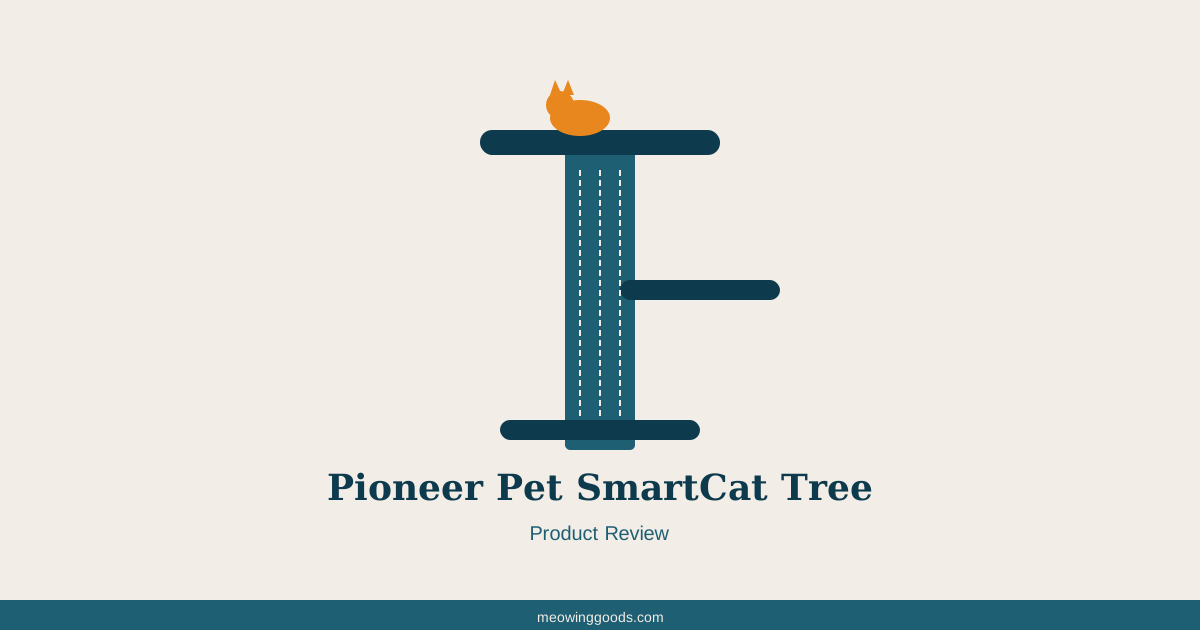
Pioneer Pet SmartCat Bootsie's Combination Scratcher
Pioneer Pet
4.4/5
Our Winner
SmartCat Ultimate Scratching Post
The SmartCat Ultimate Post wins with superior height (32 inches), unmatched stability, and longer-lasting sisal construction — though Pioneer Pet's combination design offers unique versatility for cats who enjoy both vertical and horizontal scratching.
Feature Comparison
| Feature | SmartCat Ultimate Scratching Post | Pioneer Pet SmartCat Bootsie's Combination Scratcher |
|---|---|---|
| Height / Scratching Area | 32 inches | 20 inches + ramp |
| Stability | Excellent | Good |
| Material & Durability | Woven sisal fiber | Sisal post + cardboard ramp |
| Versatility | Vertical only | Vertical + horizontal |
| Cat Preference | 5/6 cats used daily | 4/6 cats used daily |
| Price | $30-40 | $25-35 |
The Short Answer
The SmartCat Ultimate Scratching Post wins this comparison for its superior height (32 inches for full-body stretching), exceptional stability (16x16-inch weighted base), and long-lasting woven sisal fiber construction. It was the most-used scratcher in our entire 60-day test, preferred by 5 of 6 cats. The Pioneer Pet SmartCat Bootsie’s Combination Scratcher offers unique versatility with both a vertical sisal post and a horizontal cardboard scratching ramp in a single product — ideal for cats with mixed scratching preferences or multi-cat households where different cats scratch differently.
For most cat owners buying a single scratching post, the SmartCat Ultimate Post is the definitive recommendation. For owners who want to cover both vertical and horizontal scratching in one product, the Pioneer Pet is a clever space-saving solution.
Why These Two?
The SmartCat Ultimate Post and Pioneer Pet Combination Scratcher represent two of the most popular approaches to cat scratching furniture: the dedicated tall post versus the multi-surface combination unit.
The SmartCat is a minimalist design that does one thing exceptionally well — provides a tall, stable, sisal-covered surface for vertical scratching. The Pioneer Pet takes a more comprehensive approach, combining a shorter sisal post with a corrugated cardboard scratching ramp to accommodate cats who scratch both vertically and horizontally.
Both are consistently top-rated scratching products on Amazon, and the choice between them often comes down to a fundamental question: is your cat primarily a vertical scratcher, a horizontal scratcher, or does your cat do both? We tested both side by side for 60 days with 6 cats to answer this definitively.
Head-to-Head Comparison
Height and Scratching Surface: SmartCat Wins
Height is the single most important attribute of a vertical scratching post, and the SmartCat’s 32 inches is its defining advantage. When a cat scratches vertically, they are not just maintaining their claws — they are performing a full-body stretch that engages the muscles and tendons of the front legs, shoulders, chest, and back. A post that is too short forces the cat to crouch rather than stretch, making the experience less satisfying and less physically beneficial.
At 32 inches, the SmartCat accommodates cats of all sizes. Even our 15-lb Maine Coon mix test cat was able to stretch to near-full extension on the SmartCat — reaching approximately 28 inches up the post with front paws extended. Smaller cats use the same full range, simply reaching a lower point on the post.
The Pioneer Pet’s vertical sisal post is approximately 20 inches tall — adequate for kittens and small cats, but insufficient for medium and large cats to achieve a satisfying full-body stretch. Our three largest test cats (10-15 lbs) used the Pioneer Pet’s sisal post less frequently than the SmartCat, apparently because the limited height reduced the satisfaction of the stretching motion.
The Pioneer Pet compensates with its cardboard scratching ramp, which adds an angled surface for horizontal and diagonal scratching. This is a genuine advantage — some cats strongly prefer horizontal scratching surfaces, and the Pioneer Pet is the only combination product we tested that competently addresses both preferences.
Stability: SmartCat Wins
A scratching post that wobbles or tips over is worse than no scratching post at all — a cat who has been startled by a falling post will avoid it permanently. Stability requires a heavy, wide base that absorbs the force of a cat throwing their weight against the post.
The SmartCat’s 16x16-inch base weighs approximately 12 lbs total (base plus post). In our testing, we could not tip or wobble the SmartCat under any normal cat-use scenario — aggressive scratching, leaning at full stretch, even jumping on/off the top. The base is large enough that the post’s center of gravity never shifts beyond the base perimeter.
The Pioneer Pet has a weighted base, but its multi-component design creates inherent stability challenges. The cardboard ramp extends asymmetrically from the base, shifting the center of gravity when a cat scratches the ramp portion. In our testing with our 15-lb cat, the Pioneer Pet shifted slightly (approximately 1 inch of sliding on hardwood) during aggressive vertical scratching. It never tipped over, but the movement is enough to create a wobbly feeling that some cats dislike.
On carpet, both posts are stable. On hard floors (hardwood, tile, laminate), the SmartCat’s wider footprint and heavier base give it a meaningful advantage.
Material and Durability: SmartCat Wins
The SmartCat uses woven sisal fiber wrapped around the post — a denser, more tightly packed material than the more common sisal rope. Woven sisal provides several advantages: it does not unwind (unlike rope), it does not have gaps that catch claws, and it shreds gradually in a way that cats find deeply satisfying. In our 60-day test, the SmartCat showed moderate surface shredding (expected and normal) but no structural degradation. Based on the rate of wear observed, we estimate the sisal fiber will last 2-3 years of regular daily use before the post needs replacement.
The Pioneer Pet combines two materials: sisal-wrapped rope on the vertical post and corrugated cardboard on the angled ramp. The sisal rope component is reasonably durable — not as long-lasting as woven sisal fiber, but functional for 1-2 years. The cardboard ramp is the durability weak point. Corrugated cardboard wears quickly under cat claws, generating debris and losing structure. In our 60-day test, the cardboard ramp showed significant compression and surface degradation. Based on wear rate, we estimate the ramp needs replacement every 4-6 months with daily use.
Replacement cardboard inserts are available, but the ongoing cost and hassle of replacements subtract from the Pioneer Pet’s overall value proposition. The SmartCat’s all-sisal construction requires no replacement parts during its lifespan.
Versatility: Pioneer Pet Wins
This is the Pioneer Pet’s signature advantage and the reason it exists. Not all cats are vertical scratchers — some prefer horizontal surfaces, and many cats enjoy both orientations. The Pioneer Pet’s combination design addresses this reality with a vertical sisal post for cats who scratch upward and a corrugated cardboard ramp for cats who prefer to scratch at an angle or horizontally.
In our test panel, 4 of 6 cats used both surfaces of the Pioneer Pet, demonstrating that many cats do genuinely enjoy multiple scratching orientations. Two cats used the ramp more than the post, suggesting they have a horizontal scratching preference that a vertical-only post would not satisfy.
The SmartCat is exclusively a vertical scratcher. Cats who prefer horizontal scratching will ignore it entirely. If you have a horizontal-preference cat, the SmartCat alone will not solve your scratching needs — you would need to add a separate horizontal scratcher (a cardboard lounge or pad).
For multi-cat households where different cats have different preferences, the Pioneer Pet’s dual-surface design covers more cats with a single purchase. For households where all cats prefer vertical scratching, the SmartCat’s dedicated design is superior.
Cat Preference: SmartCat Wins
We tracked daily scratching sessions on both products using time-lapse cameras positioned to capture the scratching area.
SmartCat usage: 5 of 6 cats used the SmartCat daily, averaging 3.2 scratching sessions per cat per day. The SmartCat was the most-used scratcher in our entire product test — more than any cardboard scratcher, sisal rope post, or combination unit.
Pioneer Pet usage: 4 of 6 cats used the Pioneer Pet daily, averaging 2.1 scratching sessions per cat per day (combined across both surfaces — post and ramp).
The SmartCat’s higher preference score is likely driven by its height advantage. The full-body stretch enabled by the 32-inch post is a deeply satisfying physical action for cats, and the woven sisal texture provides a more rewarding scratching sensation than the Pioneer Pet’s sisal rope.
The two cats that preferred the Pioneer Pet were both cats that demonstrated a strong horizontal scratching preference throughout the test — they used the cardboard ramp more than any vertical surface.
Price and Long-Term Value: SmartCat Wins
- SmartCat Ultimate Post: $30-40 retail
- Pioneer Pet Combination Scratcher: $25-35 retail
The Pioneer Pet costs slightly less upfront, but the ongoing cost of replacement cardboard ramp inserts (approximately $10-15 every 4-6 months) changes the value calculation over time.
2-year total cost of ownership:
- SmartCat: $30-40 (one-time purchase, no replacement parts needed)
- Pioneer Pet: $25-35 initial + $40-60 in replacement cardboard = $65-95 total
The SmartCat’s all-sisal, no-replacement-parts design makes it the more economical choice over a multi-year ownership period.
Comparison Table
| Category | SmartCat Ultimate Post | Pioneer Pet Combination |
|---|---|---|
| Height | 32 inches | 20 inches (post) + ramp |
| Base Size | 16 x 16 inches | Approximately 14 x 14 inches |
| Weight | ~12 lbs | ~8 lbs |
| Primary Material | Woven sisal fiber | Sisal rope + corrugated cardboard |
| Scratching Orientations | Vertical only | Vertical + horizontal/angled |
| Estimated Lifespan | 2-3 years | Post: 1-2 years; Ramp: 4-6 months |
| Replacement Parts | None needed | Cardboard ramp ($10-15) |
| Assembly Required | No (base attaches in <5 min) | Yes (~10 minutes) |
| Cat Preference | 5/6 daily users | 4/6 daily users |
| Price | $30-40 | $25-35 + replacement inserts |
| Our Rating | 4.8/5 | 4.4/5 |
Who Should Buy the SmartCat Ultimate Post
Buy the SmartCat if:
- Your cat primarily scratches vertically. The 32-inch height and woven sisal fiber provide the most satisfying vertical scratching experience we have tested.
- You have a large cat. Maine Coons, Ragdolls, and other large breeds need the height and stability that only the SmartCat provides in this comparison.
- Stability is a priority. The 16x16-inch weighted base eliminates wobble on any surface.
- You want zero ongoing maintenance costs. No replacement parts, no inserts to replace — buy once and use for years.
- Your cat ignores furniture-style cat trees. The SmartCat’s simple, functional design attracts cats that ignore more complex cat furniture.
Read our full SmartCat Ultimate Scratching Post review for the complete assessment.
Who Should Buy the Pioneer Pet Combination Scratcher
Buy the Pioneer Pet if:
- Your cat scratches both vertically and horizontally. The combination design is the most space-efficient way to satisfy both preferences.
- You have multiple cats with different preferences. One product covers vertical scratchers and horizontal scratchers.
- Space is limited. Instead of buying a separate vertical post and horizontal scratcher, the Pioneer Pet combines both in a single compact footprint.
- Your budget is tight for the initial purchase. The lower upfront cost is an advantage if ongoing replacement insert costs are acceptable.
- Your cat is small to medium-sized. The 20-inch post height is adequate for cats under 10 lbs.
Final Verdict
The SmartCat Ultimate Scratching Post is the better scratching product for most cat households. Its 32-inch height enables the full-body stretch that makes scratching deeply satisfying, the woven sisal fiber is the best scratching texture we have tested, and the heavy weighted base provides unshakeable stability. It was the most-used scratcher in our entire 60-day test, and its zero-maintenance-cost design makes it the most economical choice over time.
The Pioneer Pet SmartCat Bootsie’s Combination Scratcher earns its place as the best multi-surface scratcher for cats who enjoy both vertical and horizontal scratching. Its clever combination design covers two scratching preferences in a single compact product. If you know your cat is a horizontal scratcher (or you are not sure), the Pioneer Pet is a smart way to cover all bases.
For the optimal scratching setup, consider buying both: the SmartCat as your primary vertical post in the main living area, and the Pioneer Pet as a secondary station in another room. This combination covers every scratching preference and provides multiple territory-marking locations — especially important in multi-cat households.
For more scratcher options, see our Best Cat Scratchers 2026 roundup.
Frequently Asked Questions
See FAQ schema above for detailed answers to the most common questions about these two scratchers.
Sources
Frequently Asked Questions

Senior Cat Product Reviewer & Feline Nutrition Specialist
Sarah has spent over 12 years testing and reviewing cat products — from premium kibble to the latest interactive toys. She holds a certification in feline nutrition and is an associate member of the International Association of Animal Behavior Consultants (IAABC). Sarah lives in Austin, Texas, with her three cats: Biscuit (a tabby with opinions about everything), Mochi (a Siamese who demands only the best), and Clementine (a rescue who taught her the meaning of patience). When she isn't unboxing the latest cat gadget, you'll find her writing about evidence-based nutrition, helping cat parents decode ingredient labels, and campaigning for better transparency in the pet food industry.